


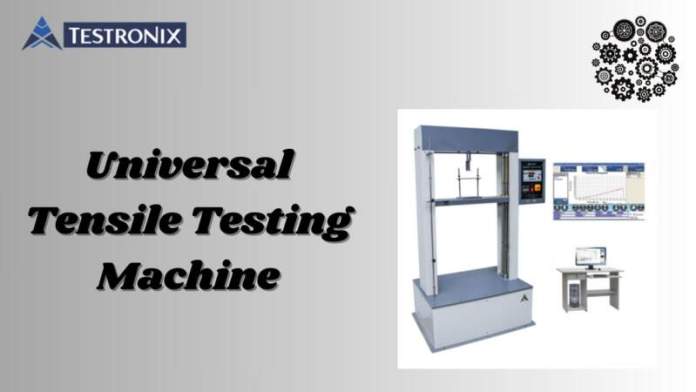
A universal testing machine (UTM) is one of the important equipment in the determination of the mechanical characteristics of a material, especially steel. When organizations have reached out to experience higher prioritization for safety and quality, the use of the universal testing machine for steel is needed. It assisted in determining its properties and characteristics like tensile strength, ductility, and toughness, before the final product of steel components is supplied to the market.
This testing is especially important in industries such as construction, automobile, and aerospace where the strength of the material has a direct role to play in the safety and the efficiency of the operation of the structure and the vehicles respectively. In this blog post, we will understand the importance of Universal Testing Machines and particularly using them in steel testing.
Know about the Universal Testing Machine
A universal testing machine is a general-purpose equipment through which the mechanical properties of the materials can be tested under several applied loads. Common components of a UTM are a load cell, control panel, and hydraulic or electromechanical actuator and as a versatile dynamic testing system, a UTM can deliver various testing functions, thus, it is critical to quality Assurance.
It offers such operations as tension, compression, bending, or any other force controlled by the engineers to check for compliance with their samples or their behavior patterns when stressed. The major tasks in material characterization and research are therefore served by universal testing machines that permit tensile, compression, and bending tests among others.
Importance of universal testing machine for steel
For evaluating the strength, ductility, and durability of steel material, pitting corrosion resistance & hardenability, innovative and resourceful conventional UTM is indispensable to check whether the industry standard for structural reliability can be used effectively for constructing buildings, manufacturing automobiles, or its highly demanding aerospace industry.
- Ensures Structural Strength: The strength of steel is its key advantage, and when it passes the test it proves that it can handle loaded weights and do so without breaking! This reliability is especially important in applications such as bridges and buildings because they are fixed structures.
- Confirms Ductility: Being a metal that belongs to the family of low-carbon steels, it is flexible, and can bend instead of cracking under pressure. Testing proves its reliability regarding the impact on real-world applications, improving safety in situations where certain flexibility is required.
- Maintains Industry Compliance: Such standards as the ASTM & ISO of steel guarantee that the material has reached some safety and durability standards. Testing, therefore assists firms to sustain these important credentials thereby boosting confidence and credibility.
- Crucial for Industry-Specific Applications: While constructing tall buildings, cars, and aircraft, steel’s performance also undergoes severe tests to check safety, sturdiness, and productivity!
- Detects Potential Defects Early: Some tests can help manufacturers deal with problems that may appear in steel before they become catastrophic. This measure is time-saving, cost-effective, and improves product durability.
Common UTM Tests Used to Characterize Steel
UTMs encompass an important tool for carrying out severally tests on steel to determine the capacity as well as the quality of this material under varying circumstances. Here are some of the key tests:
- Tensile Test: This test quantifies the yield strength and the ultimate tensile strength, which tells how much force can be applied to the steel to deform or rupture.
- Compression Test: Analyzes bending strength by putting steel through a series of tests that lets one discover how well it performs when forces in an attempt to bend or compress it come into play for different applications.
- Bend Test: Bends the steel in order to determine its ductility and toughness by pulling apart or breaking apart the material.
Note – Other tests like shear and fatigue tests also help to measure how steel can resist defrosting or breaking under long-term stress.
Conclusion
UTM Testing machines for steel are standard across the manufacturing industry, and therefore one of the necessities for strength, ductility, and the general performance of the material. It is impossible not to notice that they contribute a lot to quality and safety in industries such as; construction, automotive, and aerospace industries. Proper UTMs provide accurate testing to help these industries meet such high standards and create better and stronger products.